
Identify a Tippecanoe County Property Owner
Start with an address in Beacon or the county GIS viewer. Open the matching parcel. Note the full key and the legal description. Note the exact Owner Name field and the record date. Then search that name as grantee in the Recorder index. Locate the newest vesting deed. Compare its legal description with the parcel. If the deed is newer than the roll, ask the Auditor where the transfer stands.
- Search the address in Beacon and save the parcel key and Owner Name.
- Use the owner as a grantee in the Recorder index and find the latest vesting instrument.
- Match the deed's legal description to the same parcel rather than relying only on the street address.
- For an entity, use INBiz for business context, while treating the recorded deed as the ownership source.
Parcel Keys Prevent Owner Mix-Ups
Tippecanoe County's 18-digit key follows XX-XX-XX-XXX-XXX.XXX-XXX. County code 79 comes first. The taxing district sits at the end. Keep every punctuation mark and leading zero intact. The key beats a name when two owners share a surname, an LLC spells itself several ways, or one person holds several parcels.
Check the legal description too. It may cite section, township, range, subdivision, lot, block, acreage, or a part-of description. A mailing city can fall outside municipal limits, and a site address can change. The key and the legal description anchor the ownership trail to the land itself.
- Owner of record
- The owner name carried on the assessor roll at its record date.
- Grantee
- The party receiving the interest in a deed.
- Vesting deed
- The recorded instrument by which the current grantee took title.
- Situs address
- The property's physical site, not the owner's mail address.
Tippecanoe's Owner Name Field
An official county sample parcel screen carries the literal label Owner Name. ICHIYA LLC appears there as the sample entry. The same screen lists a parcel number and property address. It also lists a neighborhood code, legal description, class, township, school corporation, district number, and state identification number. These labels teach you how to read an owner entry. They make no current claim about the sample land.
County GIS policy asks that current physical and value data stay within 12 months. No exact lag from closing to roll update is published. That gap explains a familiar pattern. A freshly recorded deed names a new grantee. Meanwhile Beacon and the next tax bill still show the old owner.
Confirm Tippecanoe Ownership by Deed
The Tippecanoe County Recorder preserves deeds and other instruments that affect title. Search the assessment owner as a grantee. Then review the latest deed image. Check its recording number or book and page, date, parties, and legal description. Tapestry offers public pay-per-search at $8.95 per search. Laredo is a subscription product that requires an agreement and profile.
The Recorder's FAQ says online data and images run from January 16, 1970 to present. A Laredo agreement says images reach back to 1826. Keep those two access claims separate, and ask the Recorder which year you need. In-person research is open on weekdays, except for military discharges. Staff do not perform telephone title searches.
The official Recorder page confirms current access.
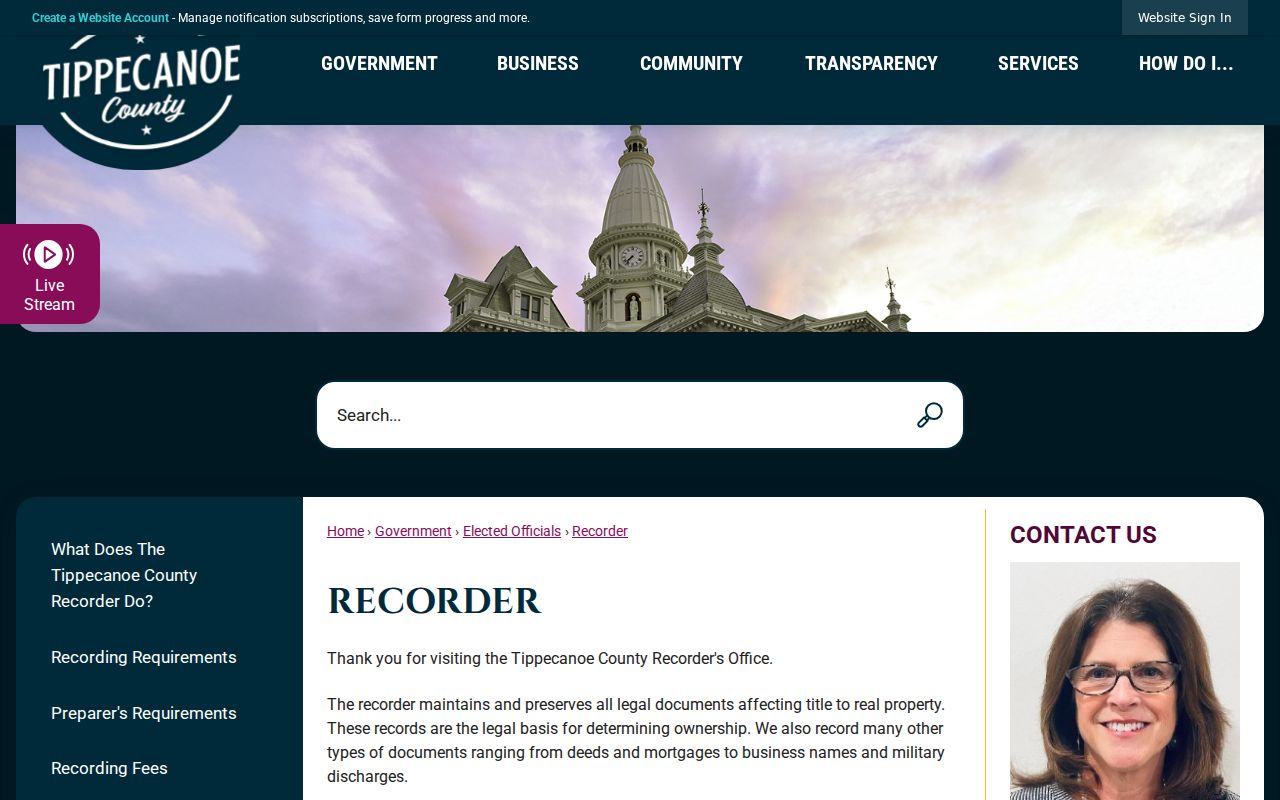
The office page is the right place to confirm current access or request an identified document. It does not handle title searches by address.
Recent Tippecanoe Sales Can Lag
A transfer passes through several offices. The parties execute the deed and Sales Disclosure. The Assessor and Auditor review those materials before recording. Then the Recorder records the instrument. The Auditor applies transfer and deduction changes. The Assessor updates parcel data on its own schedule. The Treasurer later bills from the roll.
Compare the deed recording date with the Sales Disclosure receipt, buyer, parcel, and address. If screens conflict, ask which step has posted. A tax bill names its taxpayer in a billing context. It is not a title opinion. A pending tax sale or redemption can also surface names from different dates.
Entity Owners Need Two Checks
An LLC on the roll needs a second check. Search the business name in INBiz using exact, starts-with, and contains options. Status, registered agent, and incorporator data can explain the entity name and separate similar firms. They do not prove the entity owns the parcel.
Return to the deed for title. Search punctuation and suffix variants in the Recorder index. Try the name with and without LLC, Inc., or Company. A trust or estate may need a representative deed, probate order, or transfer-on-death instrument. Tippecanoe Circuit Court holds exclusive probate jurisdiction. Public docket leads appear in MyCase, subject to sealed and confidential-file limits.
Tippecanoe Ownership and Tax Differ
The Treasurer search takes a property key, an owner name, or an address with city. It works for bills, payments, delinquency, and tax-sale clues. It cannot replace the recorded deed. The Assessor sets value, the Auditor calculates and transfers roll data, and the Treasurer collects the tax. Each name appears for an office-specific reason.
Splits and combinations need care. When a parcel split or combined within two years, search by the owner's last name to find every bill and keep the predecessor keys. Confirm any tax-sale certificate, redemption, or deed with the Auditor and Recorder before calling the ownership changed.
Monitor Tippecanoe Recording Activity
Tippecanoe County's free Property Fraud Alert sends a notice. It fires whenever a subscribed name shows up in new recording activity. It is only a signal. The alert will not block a document. It will not prove that fraud occurred or verify who owns a property in Tippecanoe County. You may register a common name. Expect some notices that have nothing to do with your land. The official alert page is where enrollment happens, and it spells out those limits plainly.
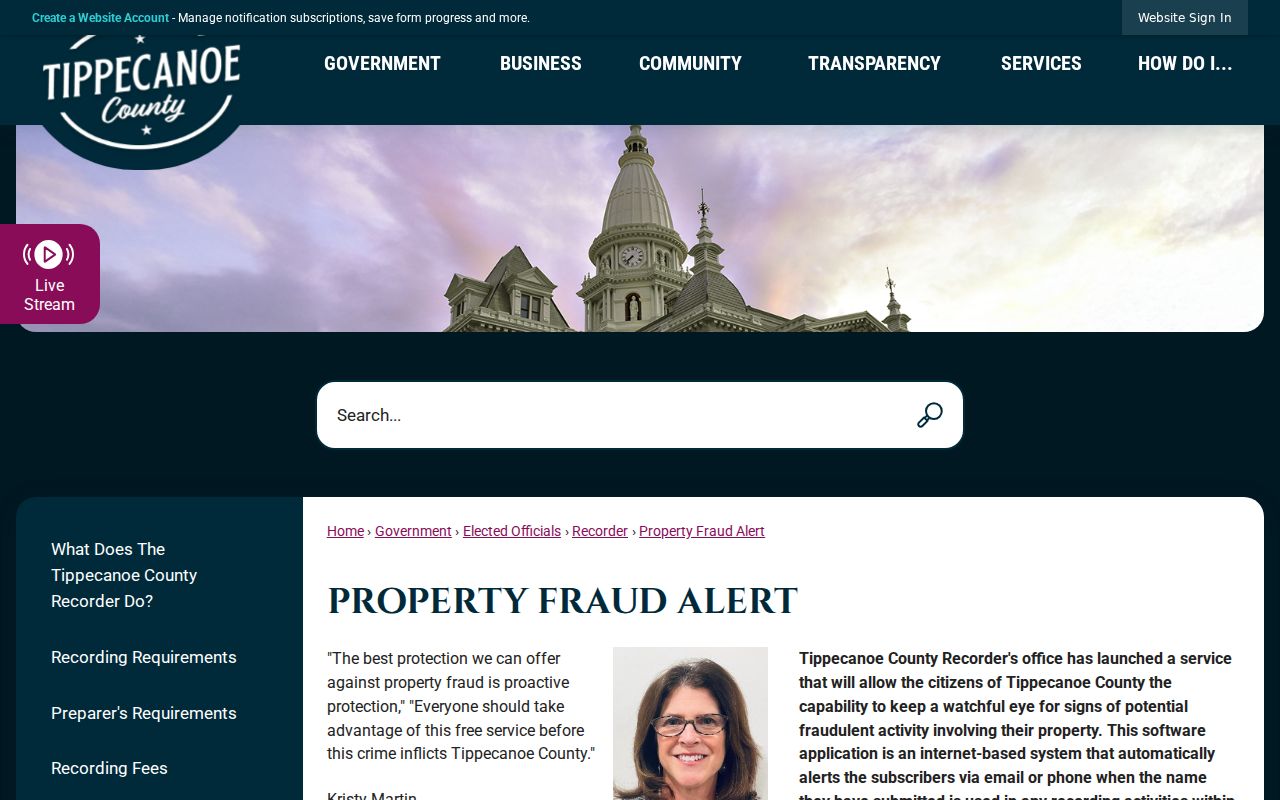
An alert is a starting point. Pull the recorded instrument itself and call the Tippecanoe County Recorder's office before drawing conclusions, because an alert is neither proof of wrongdoing nor a substitute for title insurance.
Where Tippecanoe Ownership Is Recorded
Each source answers a different question about a Tippecanoe County parcel. Start with the assessment roll, since it gives the owner of record fastest. The deed remains the recorded conveyance and the definitive instrument. A GIS map places the parcel on the ground. Probate and business filings explain an estate or entity name that appears in the deed records.
| Source | Owner Info It Gives | Access |
|---|---|---|
| Assessor / tax roll | Owner Name and parcel context | Beacon or Assessor |
| Recorder deed index | Grantee and vesting instrument | Tapestry, Laredo, counter |
| Secretary of State | Entity status and agent context | INBiz |
| GIS parcel viewer | Parcel identity and map context | General Viewer |
The owner of record is not always the person living there. A Tippecanoe County property can sit vacant. It can be occupied by someone else, or be managed by an agent for a limited liability company. Title tells you who holds legal ownership. It does not tell you who calls the place home.
Limits of a Tippecanoe Owner Lookup
A name on the tax roll proves very little on its own. It cannot confirm who lives at an address. It does not guarantee clear title or pin down a boundary line. It will never reveal every private agreement behind a parcel. Safe at Home address substitutions can hide details from a Tippecanoe County property search. Redaction, court sealing, and confidential probate material can do the same. A missing address does not mean someone owns no land.
When a record you need is not online, Tippecanoe County follows the APRA request route under IC 5-14-3. Address the request to whichever agency keeps the record. Name the parcel number or party, the record type, and the date range you want. An office is not required to build a report it does not already maintain.
Lawful use. An owner lookup supports purchase research, estate work, boundary questions, and civic review. Never use it to stalk, harass, intimidate, or harm anyone.